The clay-rich residual soils across Overland Park, shaped by Pennsylvanian limestone weathering, demand precise permeability data before any water-retaining structure is built. A simple lab test on a disturbed sample won't tell you how fractures, root channels, or shale partings behave under hydraulic load. That's where field permeability testing with Lefranc and Lugeon methods fills the gap. The local climate adds another layer: average annual rainfall hovers around 40 inches, with intense spring downpours that push infiltration systems to their limit. For stormwater basins near Indian Creek or retention ponds in the Blue Valley area, knowing the actual mass permeability of the native soil is the difference between a design that works and one that overflows after the first thunderstorm. Our team runs both constant-head and falling-head setups directly in boreholes, giving Overland Park engineers numbers they can trust for dewatering plans, seepage analysis, and deep excavation dewatering design.
A Lugeon value of less than 1 indicates tight, groutable rock; above 5 Lugeons, the formation transmits water freely and may require curtain grouting.
Methodology and scope
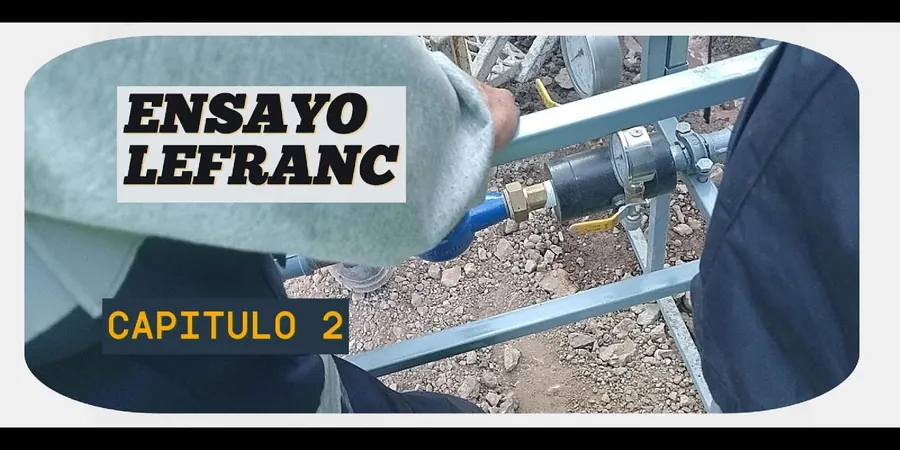
Local considerations
A developer in south Overland Park planned a dry detention basin on what the geotechnical report described as 'low-permeability clay.' Construction went ahead without field permeability testing. The basin was supposed to drain within 48 hours after a storm. First significant rainfall event: water sat for nine days, killing the fescue grass and generating complaints from adjacent homeowners. The real problem? A two-foot-thick silt seam at 9 feet depth — missed by the original borings — was feeding lateral groundwater into the basin at a rate the clay underlying soils couldn't absorb vertically. A single Lefranc test at the target depth would have caught the high-permeability lens during design. The retrofit required an underdrain system and a pumped outlet to the city storm sewer, adding roughly $40,000 to the project cost. In Overland Park's layered geology, assuming uniform permeability from boring logs alone is a gamble that rarely pays off.
Applicable standards
ASTM D6391-11: Standard Test Method for Field Measurement of Hydraulic Conductivity Using Borehole Infiltration, USBR 6510: Lugeon Test Procedure for Rock Permeability, ASCE 7-22: Minimum Design Loads (relevant for hydrostatic uplift on buried structures)
Associated technical services
Lefranc Permeability Testing in Soil
Constant-head or falling-head tests executed in cased boreholes through overburden. We isolate the test section with a screened interval and measure flow rates under steady-state conditions. Results are reported as hydraulic conductivity values that can be used directly in seepage models for retention ponds, infiltration galleries, and foundation drainage.
Lugeon Packer Testing in Rock
Single or double packer setups in NQ core holes, with five-stage pressure cycles per USBR 6510. Each stage calculates a Lugeon value. The pattern across pressure steps reveals whether the rock mass dilates under injection pressure — critical data for grouting design beneath dams or for assessing foundation seepage in fractured limestone.
Multilevel Permeability Profiling
Testing at multiple isolated horizons within a single borehole to characterize vertical variations in hydraulic conductivity. This approach maps high-permeability lenses in an otherwise tight profile — the exact scenario that causes differential seepage paths in Overland Park's interbedded shale and limestone sequences.
Typical parameters
Frequently asked questions
What does a field permeability test in Overland Park cost?
For a single Lefranc test in soil, budgets typically fall between US$610 and US$1.100, depending on depth and whether the borehole already exists or must be drilled. A complete Lugeon profile in rock with multiple pressure stages tends toward the upper end of that range, especially when packer setup and water supply logistics are factored in. Mobilization within Johnson County is efficient and keeps setup costs reasonable.
When should I choose a Lugeon test over a Lefranc test?
The Lugeon test is designed for rock masses, particularly fractured or jointed formations like the limestone members found across Overland Park. If your project involves a dam foundation, a cutoff wall design, or any structure where rock seepage controls stability, the Lugeon method with its staged pressure approach gives you data on rock mass behavior under hydraulic load. The Lefranc test applies to soil and unconsolidated overburden above bedrock.
How many test intervals do I need for a stormwater infiltration basin?
That depends on the stratigraphy. In Overland Park's typical residual clay profile, one Lefranc test at the proposed basin bottom elevation may suffice if the soil log shows uniform material. Where borings reveal interbedded silt seams, sand stringers, or variable weathering, we recommend two to three tests at different depths to capture the vertical heterogeneity. Multilevel profiling is the safest approach when design infiltration rates are critical to permit approval.