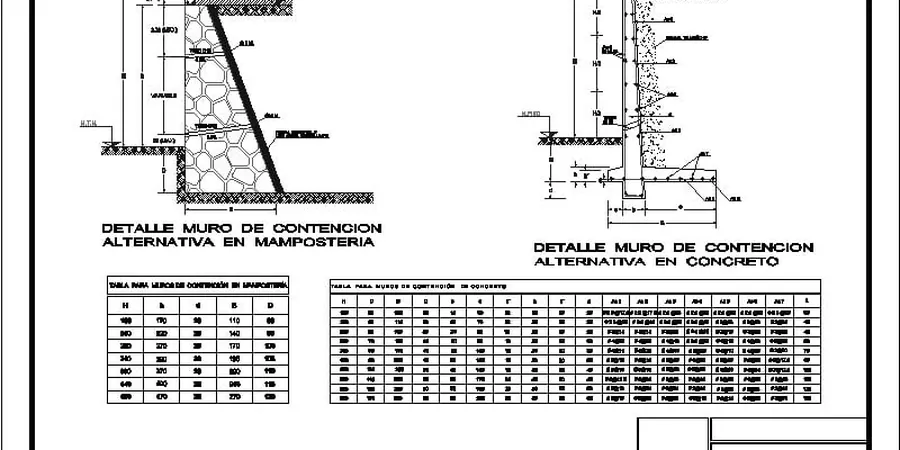
Overland Park sits on a landscape shaped by loess-mantled uplands and alluvial deposits along the Blue River tributaries. The stiff, silty clays here can look solid during a dry Kansas summer, but the plasticity index often tells a different story when seasonal moisture swings kick in. Designing a retaining wall in Overland Park without a proper geotechnical baseline means gambling on lateral earth pressures that shift more than the average spec sheet assumes. The local stratigraphy, with its interbedded shale and limestone residuum, demands a design approach that accounts for both short-term construction stability and long-term drainage performance. We routinely pair our wall design with a slope stability analysis when a cut exceeds eight feet or when the backslope inclination approaches 3H:1V, ensuring the global geometry holds up under saturated conditions.
In Overland Park, a retaining wall's real design load isn't just the soil wedge — it's the perched water that forms at the loess-bedrock contact after a wet spring.
Methodology and scope
Local considerations
One pattern we see repeatedly in Overland Park is the slow, almost imperceptible rotation of older modular block walls that were built without a continuous drainage blanket. The silty loess fines migrate into the gravel behind the wall, clogging the weep holes over three or four freeze-thaw cycles. Hydrostatic pressure builds up behind the stem, and the wall starts to lean — not dramatically, but enough that a surveyor catches the top of wall creeping two inches out of plumb over five years. The fix is never cheap, and it almost always traces back to missing or underspecified filter fabric. Another subtle risk emerges when retaining wall design in Overland Park ignores the expansive potential of the upper fat clays; a zone of seasonal moisture fluctuation behind the wall can generate swell pressures that exceed the at-rest earth pressure assumed in the original calculations, especially at the upper third of the stem height.
Applicable standards
IBC 2021 Chapter 18 – Soils and Foundations, ASCE 7-22 – Minimum Design Loads (seismic earth pressure), ASTM D2487 – Unified Soil Classification System (backfill characterization), ASTM D698 / D1557 – Compaction specifications for reinforced fill, AASHTO LRFD Bridge Design Specifications – MSE wall systems, NCMA Design Manual for Segmental Retaining Walls (SRWU, 3rd Ed.)
Associated technical services
Geotechnical Retaining Wall Design Package
Comprehensive design including lateral earth pressure calculations, global and internal stability analysis, bearing capacity verification, and drainage system detailing. We prepare sealed construction drawings and calculations suitable for Overland Park municipal plan review, referencing site-specific lab test results and the applicable IBC load combinations.
Construction-Phase Observation and Testing
Field observation of wall excavation, footing bearing surface approval, backfill compaction testing per ASTM D1557, and drainage layer verification. We document foundation conditions at the actual embedment depth and confirm that the exposed material matches the design assumptions, issuing a final letter of conformance upon completion.
Typical parameters
Frequently asked questions
What retaining wall types are most suitable for the clay soils in Overland Park?
For the stiff, moderately expansive clays and weathered shale common in Overland Park, mechanically stabilized earth (MSE) walls and reinforced segmental block walls tend to perform better than rigid gravity walls. The flexibility of MSE systems accommodates minor differential settlement without cracking, and the select granular fill zone behind the facing units provides a reliable drainage path. Cantilever cast-in-place walls work well when founded on competent limestone residuum, but they require a continuous drainage blanket and filter fabric to prevent hydrostatic buildup. We generally avoid unreinforced masonry walls taller than four feet in this area because the seasonal moisture variation in the loess generates swell pressures that exceed typical design assumptions.
What is the typical cost range for retaining wall design in Overland Park?
For a site-specific retaining wall design in Overland Park, including subsurface investigation, laboratory testing, stability calculations, and sealed construction drawings, the engineering fee typically ranges from US$1,140 to US$4,280. The final cost depends on wall height, complexity of the soil profile, and whether the project requires additional studies such as global slope stability analysis or seismic earth pressure evaluation under ASCE 7. A simple residential wall under six feet with straightforward geology will fall toward the lower end of that range, while a commercial MSE wall over twelve feet with multiple terraces and a roadway surcharge will push toward the upper end.
How deep should a retaining wall footing be in Johnson County?
The Johnson County building code amendment requires a minimum embedment of 30 inches below finished grade for frost protection. However, the geotechnical bearing depth often governs. In Overland Park, we typically extend the footing deeper when the upper soils consist of soft, organic-rich alluvium or when the design encounters weathered shale that loses strength upon excavation exposure. A footing bearing directly on unweathered limestone or dense glacial till provides the most predictable performance. The final embedment depth is determined by the bearing capacity analysis and the need to get below the zone of seasonal moisture fluctuation, which in local fat clays can extend to about five feet below grade.
Do retaining walls in Overland Park require seismic design?
Yes, but the seismic demand is moderate. Overland Park is in a region of relatively low seismicity, with a mapped short-period spectral acceleration typically around 0.15g to 0.20g for Site Class D. Under ASCE 7-22 and IBC 2021, retaining walls that support structures or are taller than six feet require a seismic earth pressure increment calculated using the Mononobe-Okabe method. In practice, the seismic coefficient (kh) applied in Overland Park retaining wall design usually ranges from 0.05 to 0.10, and the additional seismic thrust is often accommodated by a modest increase in reinforcement length or wall mass rather than a complete redesign.