The contrast between the limestone-rich uplands near Corporate Woods and the alluvial soils along Indian Creek shapes every SPT program we run in Overland Park. On the west side, weathered shale and limestone residuum can yield N-values above 50 within 15 feet, while the floodplain deposits east of Metcalf Avenue often show soft silty clays with N-values in the single digits down to 25 feet. These differences, driven by the city’s position at the edge of the Osage Plains, demand careful hammer energy calibration and split-spoon recovery documentation. We correlate blow counts with laboratory grain-size analysis to confirm the Unified Soil Classification System (USCS) designation before any bearing capacity calculation begins. The 2024 IBC and ASCE 7-22 require site-specific SPT data for Seismic Site Class determination, and Overland Park’s variable bedrock depth—anywhere from 5 to 40 feet—makes generalized assumptions risky.
N-values in Overland Park can shift from refusal to single digits within 100 lateral feet—blanket correlations without site-specific drilling miss the geology entirely.
Methodology and scope
Local considerations
One pattern we see repeatedly in Overland Park: borings terminated at auger refusal in weathered limestone, assumed to be competent bedrock, but actually perched on a 2-foot boulder with residual soil beneath. This misidentification leads to differential settlement when shallow foundations are designed for an overestimated bearing stratum. The standard penetration test, when executed with casing through the upper fill and careful refusal verification—drilling 6 inches into the refusal material and re-sampling—prevents this error. Another local risk involves the fat clays of the Lane Shale formation: SPT N-values may read 12 to 18 during dry autumn conditions but drop to 6 to 9 after spring saturation, directly impacting presumptive bearing capacity values from IBC Table 1806.2. We recommend scheduling at least one boring during the wet season if the project timeline allows.
Applicable standards
ASTM D1586-18, ASTM D2487-17 (USCS classification), IBC 2024 Section 1803, ASCE 7-22 Chapter 20 (Site Classification)
Associated technical services
SPT Drilling and Field Logging
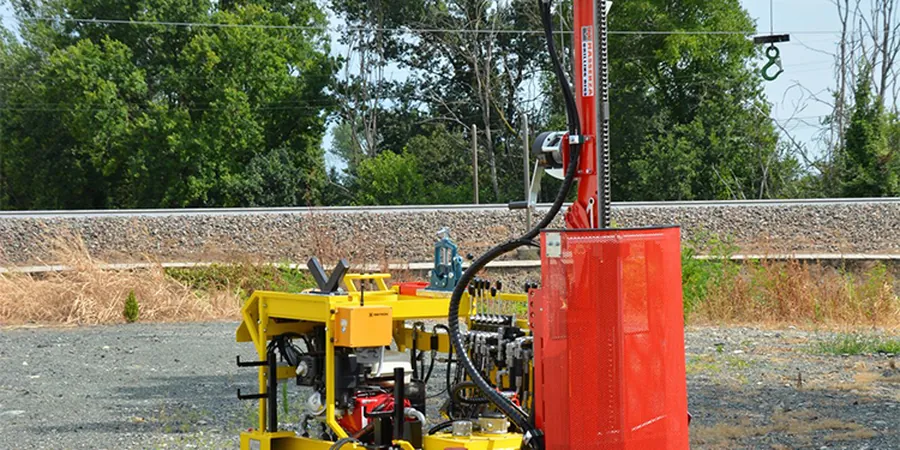
Mobilization of CME-75 or similar tracked rigs to Overland Park sites. We log blow counts, recovery, groundwater, and sample description per ASTM D2487, with real-time N-value plotting.
Liquefaction Screening
Seed-Idriss simplified procedure applied to sandy lenses in the alluvial deposits near Indian Creek and the Blue River tributaries, using SPT N-values corrected for overburden and energy ratio.
Bearing Capacity and Settlement Estimates
Conversion of corrected N60 values to allowable bearing pressure using Meyerhof and Bowles methods, with immediate settlement calculations for spread footings on the variable residuum and alluvium of Overland Park.
Typical parameters
Frequently asked questions
What is the typical cost range for SPT testing in Overland Park?
For a standard program of 3 to 5 borings to depths of 20 to 30 feet, SPT testing in Overland Park generally ranges from US$470 to US$780 per boring, depending on access, traffic control requirements, and whether laboratory classification tests are bundled. Deeper drilling into bedrock or sites with difficult access may increase the unit rate.
How many SPT borings does IBC require for a commercial building in Overland Park?
IBC 2024 Section 1803.2 specifies a minimum of one boring for every 2,500 square feet of building footprint for structures up to 10,000 square feet, and at least one additional boring for every additional 2,500 square feet. For Overland Park sites with known variable geology, the geotechnical engineer may increase the number to capture lateral variability in the residuum-to-bedrock transition.
Can SPT N-values be used directly for shallow foundation design?
Yes, but with local corrections. N-values must be corrected for overburden pressure (CN), hammer energy ratio (CE), borehole diameter, and rod length to obtain N60. In Overland Park’s weathered shale, we apply the Meyerhof bearing capacity correlation and cross-check with laboratory strength tests on split-spoon samples to avoid overestimation.
What depth do SPT borings typically go in Overland Park?
Typical depths range from 15 to 40 feet. In the upland areas west of U.S. 69, auger refusal on limestone often occurs between 15 and 25 feet. In the alluvial corridors along Indian Creek, borings may extend to 40 feet to penetrate soft clays and reach competent shale bedrock.